Statement of
The Honorable Richard M. Russell
Associate Director for Technology
The Office of Science and Technology Policy
before the
Subcommittee on Science, Technology and Space
Commerce, Science, and Transportation Committee
United States Senate
Hearing on Nanotechnology
September 17th, 2002
Mr. Chairman and members of the Subcommittee, thank you for the opportunity to appear before you today to speak about the National Nanotechnology Initiative (NNI).
Nanotechnology is research and development at the nanoscale - a scale on the order of 10-9 meters, or a thousandth of a millionth of a meter. To provide some perspective, this is approximately 1/100,000 the diameter of the average human hair. Research in nanotechnology is contributing to a fundamentally new understanding of the unique properties that occur on the nanoscale. The properties and governing physics of materials and artifacts at the nanoscale can differ significantly from those at more conventional scales. As a result, nanotechnology represents more than simply another step in the progression of technology miniaturization.
Looking to the future, commercialization of nanotechnology is expected to lead to new products, and in some cases the creation of new markets, in applications as diverse as materials and manufacturing, electronics, medicine and healthcare, environment, energy, chemicals, biotechnology, agriculture, information technology, transportation, national security, and others. Nanotechnology will likely have a broad and fundamental impact on many sectors of the economy. Some have even suggested that this impact will surpass the combined impact of both biotech and information technology.
New discoveries are being made on a regular basis. Just last week (9/10/02), researchers at Hewlett Packard announced a nanotechnology breakthrough in molecular electronics. Through a joint federal/industry funded project at the University of California at Los Angeles, the team pioneered a method to fabricate nanoscale wires separated by a thousand molecules. This novel device represents a major breakthrough in memory storage density that heralds a new era in microelectronic miniaturization. It serves as a prime example of the promise - and the challenge - posed by nanotechnology. This includes the promise of new materials, new devices, and new processes that will enable continued growth in our high tech industries. But it also highlights the challenge of understanding nanoscale phenomena, reliably producing nanoscale structures and systems, and converting this new knowledge into new technologies that contribute to our economic prosperity.
Another example of great promise is the federally funded BioCOM chip under development at the University of California at Berkeley. This device combines elements of both the nano- and the micro-scale into a lab-on-a-chip package that provides a new tool for real-time sampling of blood for Prostate Specific Antigen (PSA) screening. Though still in the prototype stage, this device, and others like it, promise to revolutionize medicine. These developments are leading to new sensors that will be utilized in medicine as well as homeland security, broadly contributing to healthcare, economic strength, and national security.
Nanotechnology is still at a very early stage of development. The role of federal R&D funding in this area is to provide the fundamental research underpinnings upon which future commercial nanoscale technologies will be based. Numerous challenges must be addressed before the envisioned promise of these technologies can be reached. These challenges include fundamental research to improve our basic understanding in several fields of science and engineering, as well as novel approaches toward synthesis, analysis and manufacturing of nanotechnology-based products. Because of the complexity, cost, and high risk associated with these issues, the private sector is often unable to assure itself of short-to-medium term returns on R&D investments. Consequently, industry is not likely to undertake the basic research investments necessary to overcome the technical barriers that currently face the nanotechnology field. The NNI program is structured to overcome these barriers so that America's industries will prosper from our investment in nanotechnology.
The President's FY 2003 budget represents a record request for federally funded R&D ($112 billion), an increase of eight percent over the previous investment. Because of its significant potential impact on the physical sciences, life sciences, and engineering?and more broadly on the U.S. economy and society?nanotechnology is viewed by the Bush Administration as an important component of the federal research and development (R&D) portfolio. Funding for nanotechnology was increased seventeen percent in the FY 2003 request ($679 million). In the previous fiscal year, President Bush signed into law a thirty seven percent increase in the NNI budget (from $464 million to $579 million).
The Administration's ongoing support for nanotechnology was articulated through a joint guidance memorandum issued to heads of Federal science and technology agencies from John H. Marburger III, Director of OSTP, and Mitchell Daniels, Director of the Office of Management and Budget, which specifically identified nanotechnology as one of six interagency R&D priorities for FY 2004.
Federal funding for nanotechnology is focused through the National Nanotechnology Initiative (NNI). The NNI is an interagency program that encompasses relevant nanotechnology R&D among the participating Federal agencies. The research agenda for the nine agencies currently participating in the NNI is coordinated by the Nanoscale Science and Engineering Technology (NSET) Subcommittee of the National Science and Technology Council (NSTC). The NSET is staffed by representatives of the participating agencies, OSTP, OMB, as well as other Federal agencies that lack relevant R&D programs but which have an interest in these technologies. NSET members meet on a monthly basis to measure progress, set priorities, organize workshops, and plan for the coming year. The National Nanotechnology Coordination Office (NNCO) assists NSET-participating agencies in coordinating their nanotechnology funding. It also serves as the secretariat for the NNI. The NNCO carries out the objectives established by the NSET members, coordinates and publishes information from workshops sponsored by the NNI, and prepares annual reports on the activities of the NNI. The NNCO also contracts for program reviews to provide feedback on the NNI.
The federal agencies currently performing nanotechnology research coordinated through the NNI are:
- Department of Defense;
- Department of Energy;
- Department of Justice;
- Department of Transportation;
- Environmental Protection Agency;
- National Aeronautics and Space Administration;
- National Institutes of Health;
- National Institute of Standards and Technology; and
- National Science Foundation.
This funding provides support for a range of activities, which include: basic research, focused efforts directed at answering specific sets of questions of high significance ? so-called "grand challenges," research infrastructure (instrumentation, equipment, facilities), and centers and networks of excellence, which are larger centralized facilities intended to provide sites for cooperative and collaborative efforts among distributed networks and groups of researchers at multiple affiliated institutions. Depending on the agency, funding is being used to support mission-oriented research within agencies, research at national laboratories, or to support research at academic institutions. A small portion of the funding is also dedicated to addressing non-technical research problems in a broader context, including societal implications, and workforce and training issues that will likely emerge in relation to nanotechnology.
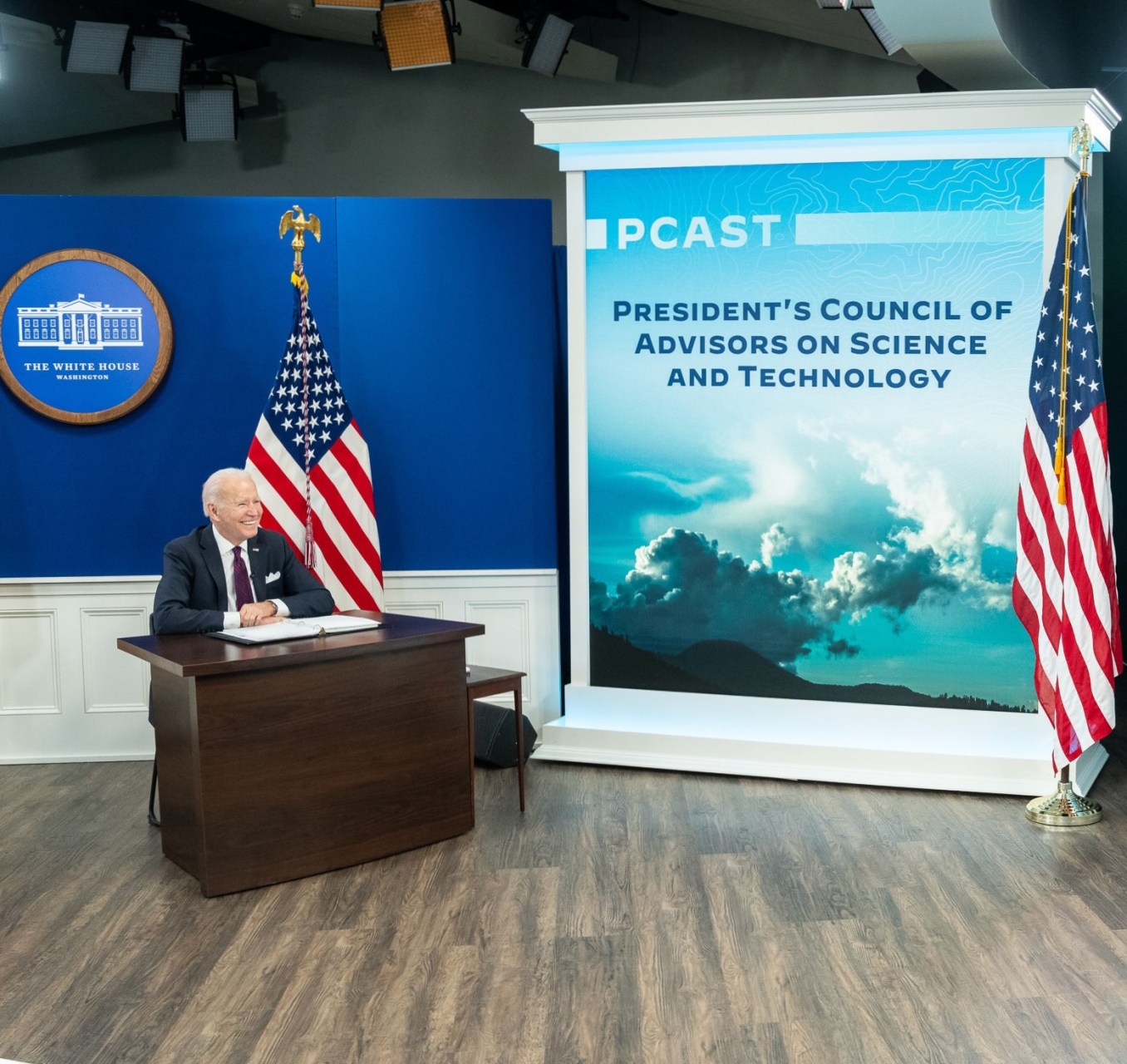
The National Research Council (NRC) conducted an evaluation study of the NNI from mid-2001 to mid-2002. Earlier this summer, the NRC released the results of this study in a report entitled Small Wonders, Endless Frontiers: A Review of the National Nanotechnology Initiative. The report highlighted the strong leadership of the NNI, praised the degree of interagency collaboration, and lauded the early successes of the research programs. The report also provided a number of recommendations to further strengthen the NNI. OSTP is working closely with the NNCO, as well as through its representation on the NSTC's Nanoscale Science and Engineering Technology Subcommittee, to improve the structure of the NNI, and to create a stronger framework for implementing the NNI's technical objectives. One recommendation of the NRC was to create an independent Nanoscience and Nanotechnology Advisory Board (NNAB) to provide input to the NSET members. OSTP believes that this function can be met through the President's Council of Advisors and Science and Technology (PCAST). As you know, PCAST members represent a distinguished cross section of industry and academia and have always functioned as an external advisory board on science and technology issues of relevance to the nation. They are clearly qualified to carry out such functions for nanotechnology.
The NNI was initiated in FY 2001. The early program successes and positive independent review by the NRC provide a sound justification for continued support in this important research field. With a history of only two years, the ultimate impact of the NNI lies in the future and will only be realized through continued federal R&D funding.
Mr. Chairman and Members of the Committee, I hope that this overview has conveyed this Administration's commitment to nanotechnology and the NNI program. OSTP is actively working with the NNCO to implement many of the NRC recommendations. We believe that our efforts will improve the program substantially and will enhance our investment in nanotechnology.